
Financial planners advise against putting capital to work by anticipating what might go up or down.

Three key instruments that can help you meet your financial goals, while also allowing you to enjoy tax deductions are ELSS, term cover and health cover.

The Fed interest rate decision, domestic macroeconomic data announcements and quarterly earnings will be the major sentiment drivers for the equity market in a holiday-shortened week ahead, analysts said. Investors will also take cues from the monthly auto sales numbers to be announced on Monday. Equity markets will remain closed on Thursday for Diwali Laxmi Pujan and on Friday for Diwali Balipratipada.

It should cover mandatory expenses, insurance premiums and loan installments for six months to a year.

The rupee rose by 12 paise to close at 79.78 against the US dollar on Monday due to a weak dollar in overseas markets and an improved appetite for riskier assets. Stronger regional currencies also supported the rupee sentiment ahead of the US Fed policy decision on Wednesday. Weak domestic equities and FII outflows, however, capped sharp gains. At the inter-bank forex market, the local unit opened at 79.86 against the greenback and moved in a range of 79.70 to 79.87 in the day trade.

Equity benchmark Sensex tumbled over 273 points on Tuesday, tracking losses in index majors Reliance Industries, Dr Reddy's and Axis Bank amid a massive selloff in Chinese markets. Despite opening on a positive note, the 30-share BSE index turned red to end 273.51 points or 0.52 per cent lower at 52,578.76, while the broader NSE Nifty fell 78 points or 0.49 per cent to 15,746.45. Dr Reddy's was the top loser in the Sensex pack, plunging over 10 per cent, after the company reported s 36 per cent decline in consolidated net profit at Rs 380.4 crore for the quarter ended June 30, 2021, on account of higher expenses.

There is polarisation among sectors with IT and healthcare receiving the lion's share of FPI money in the past two quarters.

Treat silver as part of the procyclical or growth assets in your portfolio, advises Sanjay Kumar Singh.

Titan was the top loser in the Sensex pack, shedding over 3 per cent, followed by M&M, HUL, Maruti, Asian Paints and IndusInd Bank. Nifty fell 91 points to 17,157.40.
Infosys was the top gainer in the Sensex pack, rising around 3 per cent, followed by Bajaj Auto, SBI, ICICI Bank, HCL Tech, Titan and Asian Paints. NSE Nifty rose 19.85 points or 0.14 per cent to 13,760.55 -- its new closing record.

Reliance Industries was the top gainer in the Sensex pack, soaring over 4 per cent, followed by Titan, Tata Steel, Bajaj Auto, Maruti and Dr Reddy's. Nifty advanced 89.45 points to its all-time closing peak of 17,323.60.

Market watchers believe that the change in guidelines fly in the face of some of the recent initiatives taken by the government, such as easing norms for foreign portfolio investors.

The rupee weakened by 14 paise to close at a new lifetime low of 79.59 against the US dollar on Tuesday as a strong greenback overseas and persistent foreign fund outflows continued to weigh on investor sentiment. This comes a day after the RBI announced measures for international trade settlement in rupees. At the interbank forex market, the local unit opened weak at 79.55 against the greenback and witnessed an intra-day high of 79.53 and a low of 79.66.

The rupee depreciated 11 paise to a record low of 78.96 against the US dollar in opening trade on Wednesday, weighed down by persistent foreign capital outflows. At the interbank foreign exchange, the rupee opened on a weak note at 78.86 against the American dollar, then lost ground to quote at 78.96 -- its all-time low level, registering a fall of 11 paise from the last close. On Tuesday, the rupee plunged by 48 paise to close at record low of 78.85 against the US dollar.

Bajaj Finance was the top laggard in the Sensex pack, skidding over 2 per cent, followed by Kotak Bank, Nestle India, HDFC, M&M and ICICI Bank. ONGC was the top gainer, rallying around 8 per cent. NTPC, Asian Paints, Tech Mahindra, PowerGrid and IndusInd Bank were among the other winners.

After outperforming the broader market and their public sector peers for the better part of the post-Lehman period, private sector banks - such as HDFC Bank, ICICI Bank, Axis Bank, and Kotak Mahindra Bank - are now underperforming. Last week, the Nifty Private Bank index was up just 6 per cent year-to-date in the calendar year 2021, against nearly 13 per cent rally in the Bank Nifty and a 15 per cent rise in the benchmark Nifty50. Public sector (PSU) banks, such as State bank of India, Bank of Baroda, and Punjab National Bank, are now rally leaders and outperforming the broader market. The Nifty PSU Bank index was up 42 per cent since the beginning of this calendar year. But on a longer term, the Nifty Private Bank index is up 101 per cent since March 2016, against a 118 per cent rally in the Bank Nifty and just 2 per cent rise in the Nifty PSU Bank index in the period.

Sliding for the fifth straight session, the rupee fell 3 paise to close at a fresh lifetime low of 79.06 against the US dollar on Thursday amid a strong greenback overseas and unrelenting foreign fund outflows. At the interbank forex market, the local unit opened at 78.92 against the greenback and witnessed an intra-day high of 78.90 and a low of 79.07. It finally settled at 79.06, down 3 paise over its previous close of 79.03.

Titan was the top gainer in the Sensex pack, rising around 4 per cent, followed by HDFC, Nestle India, IndusInd Bank, UltraTech Cement and Bharti Airtel. On the other hand, Bajaj Auto, Tata Steel and NTPC were the laggards.

The government on Friday proposed hiking the securities transaction tax on Futures & Options (F&O) contracts, a move that will increase the trading costs in the derivatives segment as well as help in curbing excessive trades. In the Finance Bill 2023, passed by the Lok Sabha on Friday, the Securities Transaction Tax (STT) on options is proposed to be increased to 0.0625 per cent from 0.05 per cent and on futures contracts to 0.0125 from 0.01 per cent. Analysts opined that higher STT will shore up the government's revenues to some extent and also discourage excessive trading since a large number of retail traders are losing money in the segment.
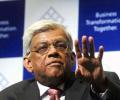
It is, thus, logical that some compensation is paid to a lender, especially when a customer is poached within two years, Parekh noted.

Top gainers in the Sensex pack included Sun Pharma, IndusInd Bank, RIL, ITC, Vedanta, Asian Paints, HDFC and Infosys, advancing up to 3.02 per cent.

'When fund managers talk of being bullish for the long term, they assume strong economic growth.' 'That is what they have assumed every year, naively believing the pronouncements and promises of ministers.' 'Unfortunately, they have been wrong year after year,' observes Debashis Basu, editor, www.moneylife.in.

SBI was the top loser in the Sensex pack, shedding around 3 per cent, followed by Kotak Bank, IndusInd Bank, NTPC, ICICI Bank, Axis Bank and HDFC Bank. On the other hand, HUL, ITC, L&T, Bajaj Finserv and Tech Mahindra ended with gains.

Bajaj Finance was the top laggard in the Sensex pack, tanking up to 8 per cent, followed by M&M, Tata Steel, Bajaj Auto, ONGC, HDFC Bank and Kotak Bank. On the other hand, TCS, Tech Mahindra, HUL, Axis Bank and ITC were the top gainers.

Axis Bank was the top gainer in the Sensex pack, soaring over 13 per cent, followed by ICICI Bank, HDFC Bank, IndusInd Bank and Bajaj Finance. On the other hand, Sun Pharma, UltraTech Cement, Titan and Asian Paints were among the laggards.

Reliance Industries was the top gainer in the Sensex pack, surging over 3 per cent, followed by Bajaj Finserv, IndusInd Bank, HDFC twins and Kotak Bank. NSE Nifty surged 143.25 points or 1.18 per cent to 12,263.55.

IndusInd Bank was the top gainer in the Sensex pack, rallying over 15 per cent, followed by Bajaj Finance, HDFC, Axis Bank, ICICI Bank, M&M and SBI. On the other hand, Sun Pharma, Nestle India, NTPC, HCL Tech and Bajaj Auto were among the laggards.

Small stocks of Dalal Street grappled with turbulent times in 2022 as high volatility and higher interest rate regime sapped investors' appetite for these scrips but the horizon ahead seems less cloudy for the New Year. While the 30-share Sensex scaled multiple record peaks with bluechips glittering, small stocks underperformed and the BSE smallcap index declined more than 3 per cent this year. In comparison, the BSE Sensex climbed 2,673.61 points or 4.58 per cent till December 27.

'It could tempt investors to pick stocks that are not fundamentally sound.'

Analysts caution against volatility and recommend buying stocks of companies that are on strong fundamental footing that have been beaten down badly in the recent carnage.

Piramal Realty received equity funding from Warburg Pincus and Goldman Sachs in July.

Kotak Bank was the top laggard in the Sensex pack, shedding over 2 per cent, followed by ITC, PowerGrid, M&M, HDFC, Asian Paints and NTPC. On the other hand, Maruti rallied over 4 per cent. Bharti Airtel, Axis Bank, IndusInd Bank and Bajaj Finance were also among the gainers.

Kotak Bank was the top loser in the Sensex pack, falling around 3 per cent, followed by Axis Bank, Sun Pharma, HDFC Bank, Bajaj Finance and Asian Paints. On the other hand, ONGC, PowerGrid and IndusInd Bank were the gainers.

Retail investors have gained significant heft in the past year amid a sustained uptick in Indian equities. The share of retail investors in companies listed on the NSE reached an all-time high of 7.32 per cent in the quarter ended December 31, 2021, up from 7.13 per cent in the previous quarter and 6.9 per cent a year ago, the data from PRIME Infobase shows. This was despite the Nifty's 1.5 per cent decline during the quarter.

Mutual fund is an investment vehicle that is made up of a pool of funds collected from many investors for the purpose of investing in securities such as stocks, bonds, money market instruments and similar assets.
Yes Bank was the top gainer in the Sensex pack, soaring 24.03 per cent, after the lender said it had received a binding offer for $ 1.2 billion funding from an overseas investor. SBI, Infosys, Tata Motors, Bharti Airtel, HCL Tech and HDFC too rallied up to 7.69 per cent.

Gains were led by HUL on better-than-expected margins in March quarter and capital goods shares.

Equity benchmarks began the week on a downbeat note on Monday, weighed by heavy selling in market heavyweight Reliance Industries and persisting weakness in global bourses. The rupee plunged to its lifetime low against the US dollar amid unabated foreign fund outflows, underscoring the risk-off sentiment prevailing globally as central banks embark on policy tightening to tame soaring inflation. Slipping for the second straight session, the 30-share BSE Sensex shed 364.91 points or 0.67 per cent to close at 54,470.67.

Strong foreign fund inflows, a weakening dollar and slipping oil prices propped up the local unit.
Top losers in the Sensex pack included Yes Bank, IndusInd Bank, Tata Motors, RIL, ONGC, Bajaj Auto, Vedanta, Tata Steel, TCS, HDFC Bank and ICICI Bank, which fell up to 3.29 per cent.
